
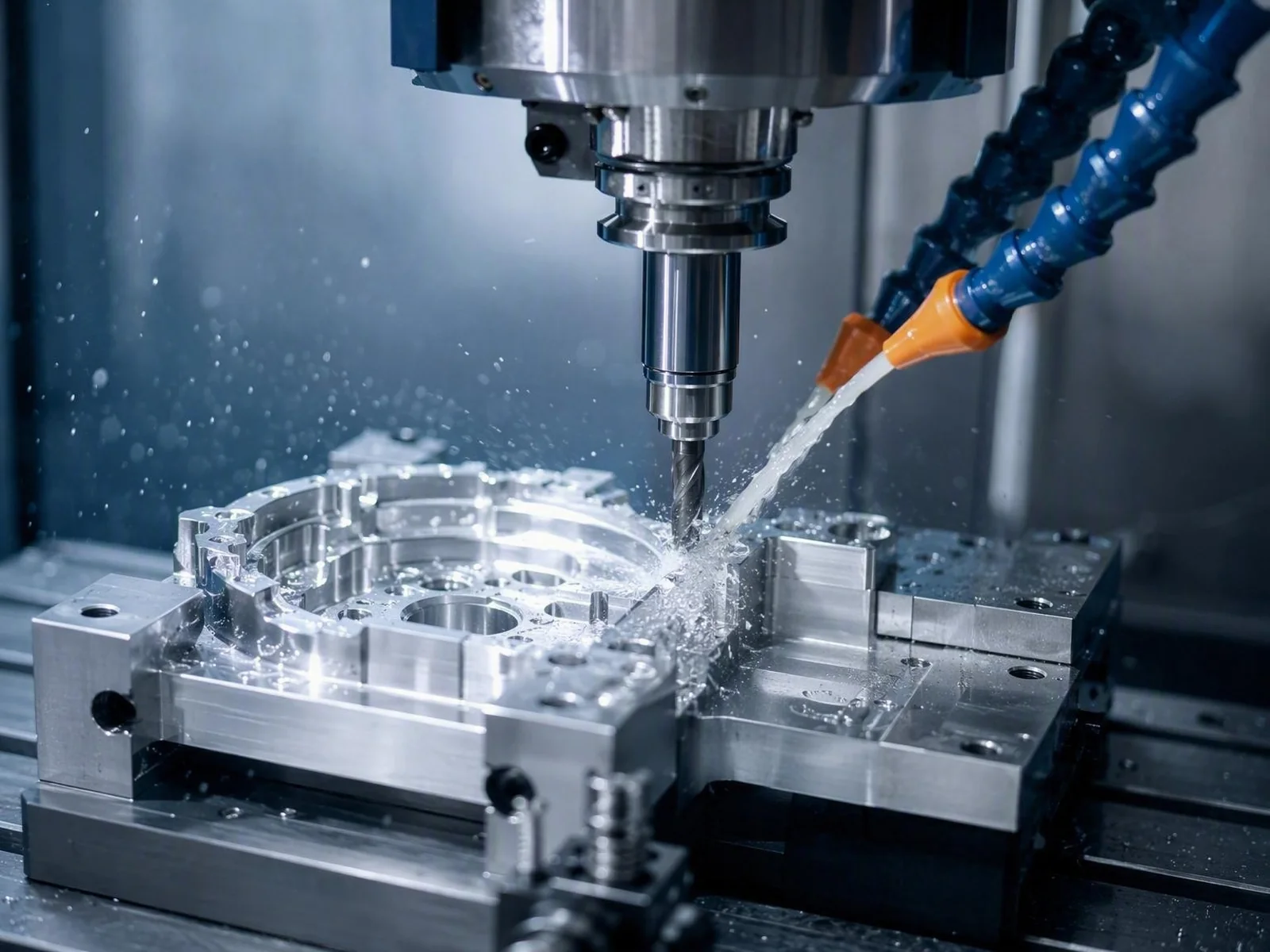
Two Routes to a Metal Part
When a component needs to be made in metal, two broad processes dominate: CNC machining, which removes material from solid stock, and sheet metal fabrication, which forms parts from flat material. Both produce precise, repeatable results, and both have applications where they are clearly the better choice.
Geometry Decides First
CNC machining handles three-dimensional form: pockets, bores, threads, complex contours and tight internal features. It is the natural choice for parts whose shape cannot be produced by folding a flat blank. Sheet metal fabrication handles parts that are essentially constant-thickness: brackets, enclosures, panels, chassis and frames. If a design consists of flat faces joined by bends, fabrication is usually faster and cheaper; if it requires material removed from within a solid, machining is required.
Tolerance and Surface Finish
Machining generally holds tighter tolerances and offers better surface finish control, with the possibility of fine boring, grinding or lapping for demanding fits. Sheet metal tolerances depend on the forming process — cut profiles are accurate, but formed dimensions vary with springback and accumulate across multiple bends. Where a part needs a precise bore or a sealing face, those features are frequently machined after forming.
Volume and Tooling Economics
- Low volume, complex geometry — CNC machining, since no dedicated tooling is needed beyond programming and fixtures.
- Low volume, flat geometry — laser cutting plus bending is often the fastest route to a first article.
- High volume, flat geometry — stamping or dedicated forming tools eventually beat laser cutting on unit cost.
- High volume, complex geometry — casting or forging followed by finish machining can reduce cost and material waste.
Material Utilisation and Weight
Machining a part from solid stock produces chips, and the material removed is paid for but unused. Sheet metal nesting is far more efficient for flat parts, since blanks are arranged to minimise scrap. Where weight matters — aerospace, robotics, portable equipment — fabricated or formed structures often achieve stiffness with less mass than a machined equivalent.
Combining Both Processes
The two are frequently partners rather than competitors. A welded steel frame may have machined mounting pads to guarantee alignment. A machined manifold may sit inside a formed enclosure. An aluminium bracket may be laser cut and bent, then tapped and faced on a machining centre. Specifying the process per feature, rather than per part, often produces the lowest total cost and the best function.
How to Get the Right Recommendation
Provide the 3D model, material, quantity, functional requirements and the features that genuinely need tight tolerance. A supplier who can offer both processes will usually recommend the better route for the specific geometry and volume, rather than bending every part toward the capability they happen to have.