
The Role of Insulation in Equipment Design
Insulating materials are easy to overlook until something fails. In automation equipment they separate conductive parts, isolate control electronics from frames, protect operators from live surfaces and prevent stray current from disturbing sensitive signals. Getting the material right is a matter of both safety and reliability.
Start With the Electrical Requirement
Dielectric strength describes the voltage a material can withstand per unit thickness before breakdown. It is a guide, not a guarantee, because breakdown voltage also depends on temperature, humidity, contamination and the presence of sharp edges. Compounding factors — surface tracking, creepage and clearance distances — matter as much as the bulk property. Working voltage with a defined safety margin should drive the initial shortlist.
Thermal Limits Set the Ceiling
Insulation degrades with heat, and the degradation is cumulative. Every material class has a maximum continuous service temperature, above which mechanical and electrical properties fall away rapidly. Enclosures around motors, drives and power supplies run warmer than ambient, so the specified temperature class should reflect the internal environment rather than the room.
Mechanical and Machining Considerations
- Compressive strength — critical for spacers and standoffs carrying load.
- Impact resistance — brittle materials crack under vibration or assembly torque.
- Machinability — some laminates machine cleanly into precise parts; others fray, delaminate or absorb moisture.
- Moisture absorption — matters in humid or washdown environments, where absorbed water degrades insulation resistance.
Common Material Families
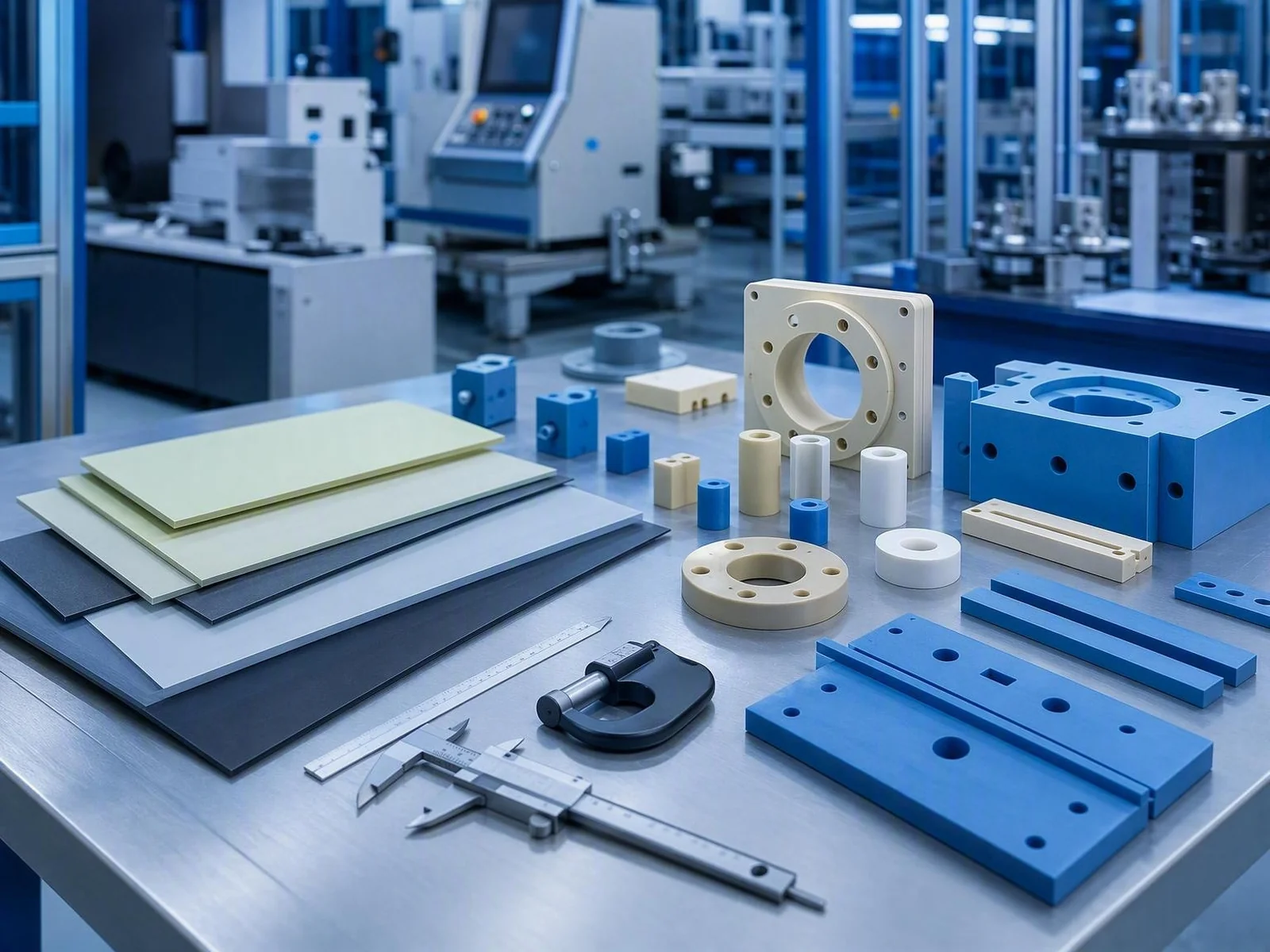
Phenolic laminates offer good mechanical strength and machinability at moderate cost. Epoxy glass laminates provide higher mechanical and electrical performance with excellent dimensional stability, making them a common choice for structural insulation. Polyester and polyimide films suit thin, flexible barriers and high-temperature applications respectively. Rigid engineering plastics such as POM, PTFE and PEEK cover abrasion resistance, chemical exposure and higher temperatures where a machined part is needed.
Design and Assembly Practice
Sharp internal corners concentrate electric stress and should be radiused. Metal fasteners passing through insulation reduce creepage distance and often require a bushing or an increased clearance. Edges should be deburred, since a burr is both a mechanical stress raiser and a point of field concentration. Where parts are assembled by hand, designing for orientation — asymmetric shapes rather than symmetric plates — prevents incorrect fitting.
Documenting the Choice
Recording why a material was selected — voltage class, temperature, chemical exposure, agency requirement — saves rework later. When a design is revised or a supplier changes, the original reasoning is the fastest way to confirm the substitution is safe.