Software Determines Machine Behaviour
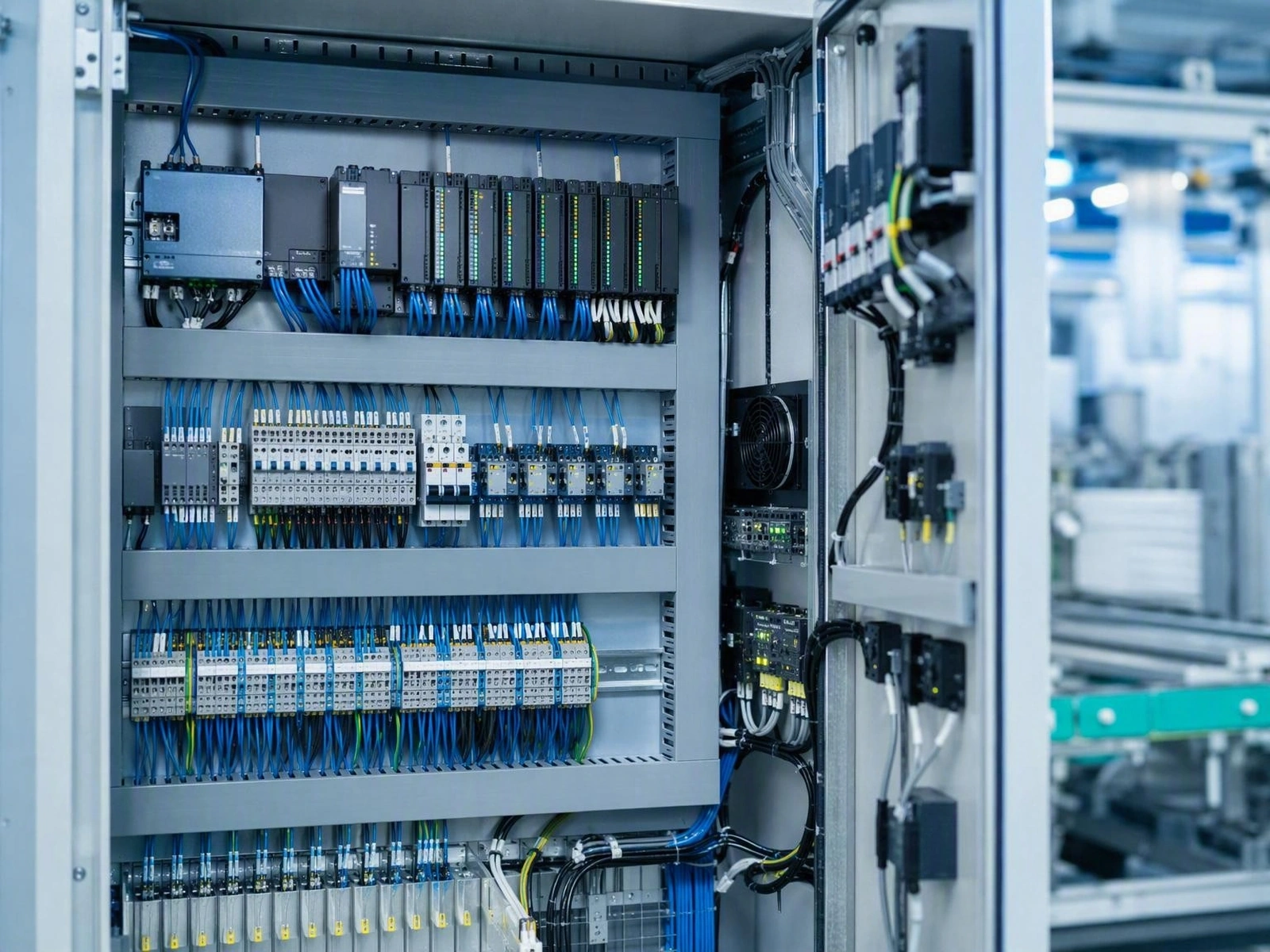
Two machines can share identical hardware and behave completely differently. The difference is the control logic. Well-written PLC programs make equipment predictable, diagnosable and safe; poorly structured ones produce intermittent faults that take days to trace and erode operator confidence in the whole line.
Structure Before Code
Reliable programs begin with a clear structure. Defining the machine states, the transitions between them and the conditions required at each step produces logic that is readable months later. A state-machine approach — where the machine is always in exactly one defined state — removes the tangled interlocking that makes improvised logic so hard to maintain. Naming conventions, modular function blocks and consistent commenting cost little at authoring time and repay heavily during troubleshooting.
Safety, Sequences and Interlocks
Safety functions belong in the safety chain, not in the standard program. Beyond that, well-designed interlocking prevents damage rather than reacting to it: guarding against conflicting axis motion, blocking a start until guards are closed, and stopping a cycle cleanly when a downstream station faults. Sequencing should tolerate normal events like a missing part without triggering a full stop, while still halting decisively on genuine faults.
The Operator Interface
The HMI is where the program meets the people running the machine. Effective screens show current state, cycle counts, key measurements and active alarms, with alarm messages that describe the condition and the likely cause rather than an internal code. Front panels cluttered with every available variable slow operators down; a small number of clear, task-focused screens speeds up both operation and fault response.
Machine Vision as Part of the Control System
Vision inspection is no longer a separate island. A vision system reports results into the PLC so the machine can act on them — diverting a reject, halting a cycle, or tagging a part for traceability. Designing the data exchange up front prevents the situation where inspection data is generated but never used.
Data, Diagnostics and Remote Support
Recording cycle times, downtime reasons and reject counts turns control software into a management tool. Historical data reveals bottlenecks and recurring faults. Remote diagnostic access, securely configured, lets engineers investigate without travelling, cutting response time substantially.
Design for the Person Who Maintains It
The engineer who commissioned a machine will not be the one maintaining it in five years. Code that can be read, documentation that reflects the delivered program, and a control architecture that a new engineer can understand are what keep a machine productive over its full service life.