What a Linear Slide Module Is
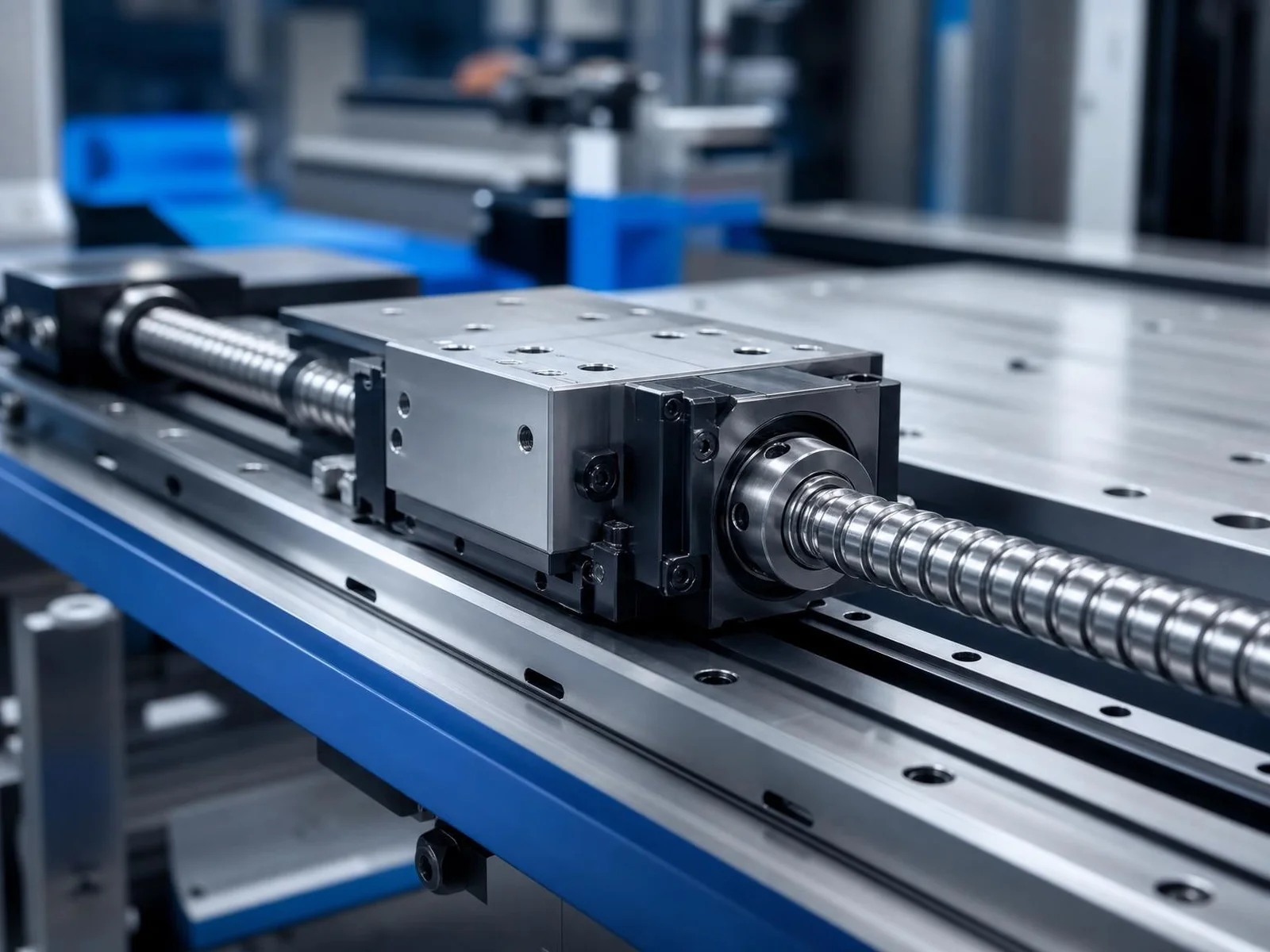
A linear slide module packages a guide rail, a carriage, a drive and a base into one ready-to-mount unit. Instead of designing a motion axis from separate components, engineers specify a module and integrate it directly into a machine frame. The result is faster design, fewer assembly errors and predictable performance.
Start With the Load
Every axis begins with a load calculation. Consider the payload mass, the position of its centre of gravity, and the resulting moment on the carriage. Loads mounted far from the carriage centre generate pitch, yaw and roll moments that reduce life. When the moment is significant, choose a wider rail spacing or a larger carriage rather than simply a longer stroke.
Stroke, Speed and Duty Cycle
Stroke defines the usable travel, and it interacts directly with speed: a longer stroke at high speed demands greater structural stiffness to control settling. Duty cycle matters more than peak speed. A module running continuously at moderate speed will wear differently from one making short, high-acceleration moves, and the acceleration profile often determines the required drive torque.
Drive Type: Ball Screw or Belt
- Ball screw drive — high thrust, excellent positioning accuracy and rigidity. The usual choice for pressing, dispensing, precision assembly and vertical axes.
- Belt drive — longer strokes at lower cost, with high speed but lower thrust and accuracy. Suited to pick-and-place transfer and light handling over long distances.
Accuracy and Repeatability
Repeatability — the ability to return to the same position — is usually the more important figure for automation. Positioning accuracy describes how close the axis reaches an absolute target. For most assembly and handling tasks, repeatability of a few hundredths of a millimetre is sufficient; for metrology or precision bonding, tighter values and a closed-loop feedback scale may be required.
Environment and Maintenance
Consider dust, chips, coolant, humidity and cleaning regime. A sealed, lubricated-for-life carriage suits clean environments, while dusty or washdown areas call for bellows covers, wipers and protected cable routing. Accessibility for lubrication and belt tensioning should be reviewed at the design stage, since both affect long-term reliability.